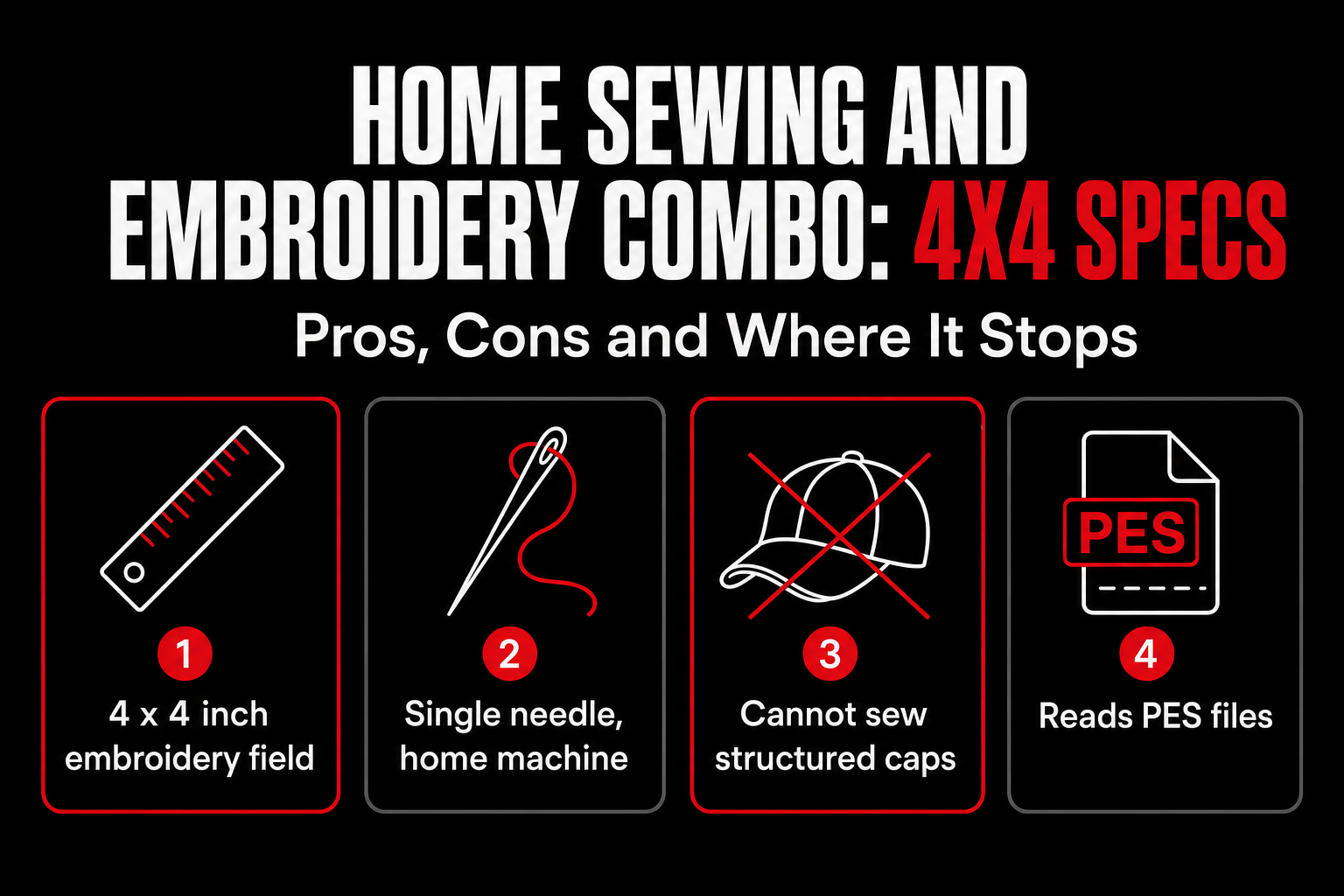
A research-based look at the Brother SE630 sewing and embroidery machine, with its real specs, strengths and limits, a checked SE630 vs SE700 vs SE725 table, and what a small shop needs for caps and production work.
A research-based look at the Brother SE725 sewing and embroidery machine. Official specs, what the 4x4 field really allows, pros and cons, how it compares with the SE700, SE630, SE1900 and PE800, and where it stops for a decorating shop.
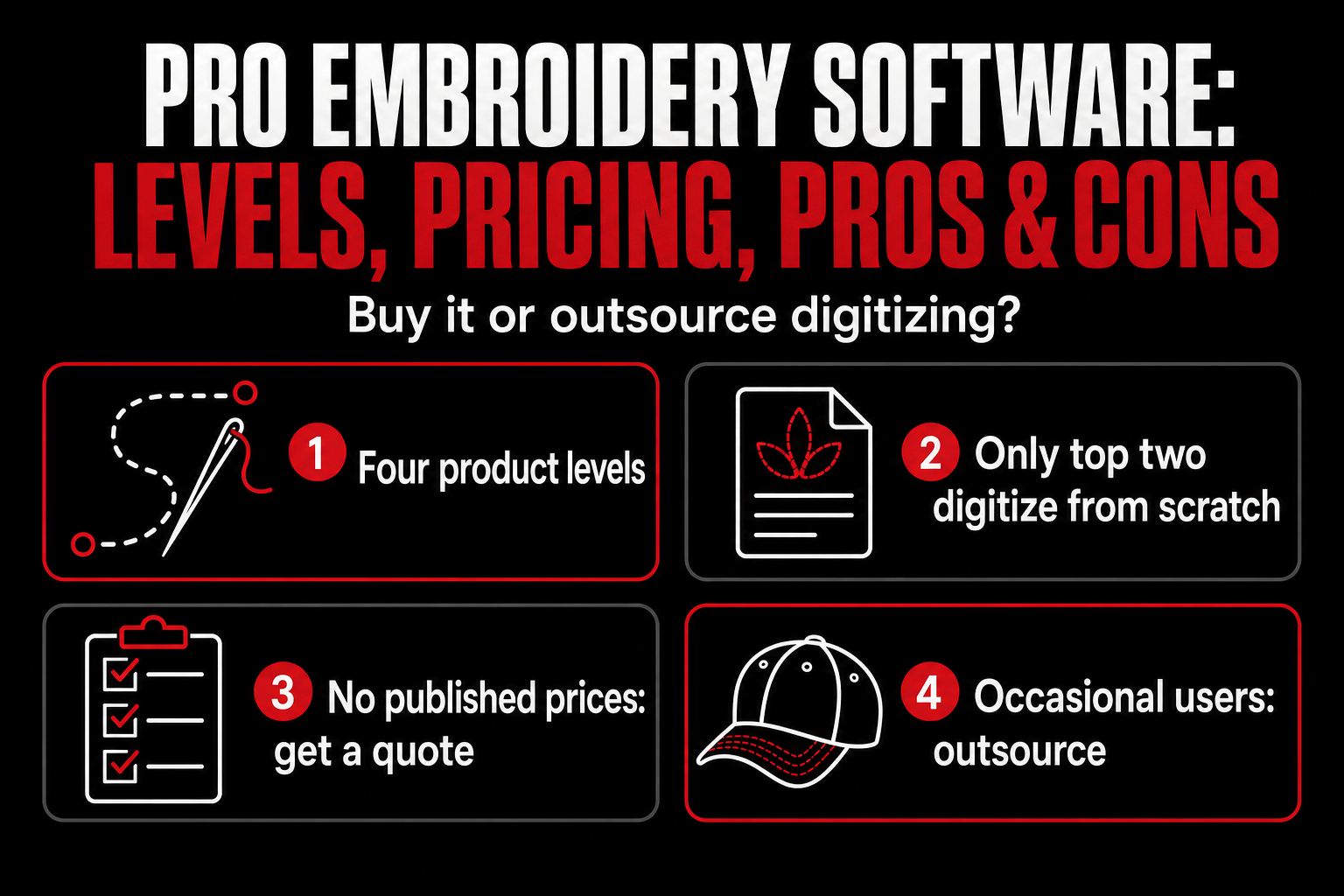
A research-based review of Wilcom EmbroideryStudio 2026 for embroidery shops, covering the four product levels, how it is sold, pros and cons, and when buying it makes more sense than outsourcing digitizing.
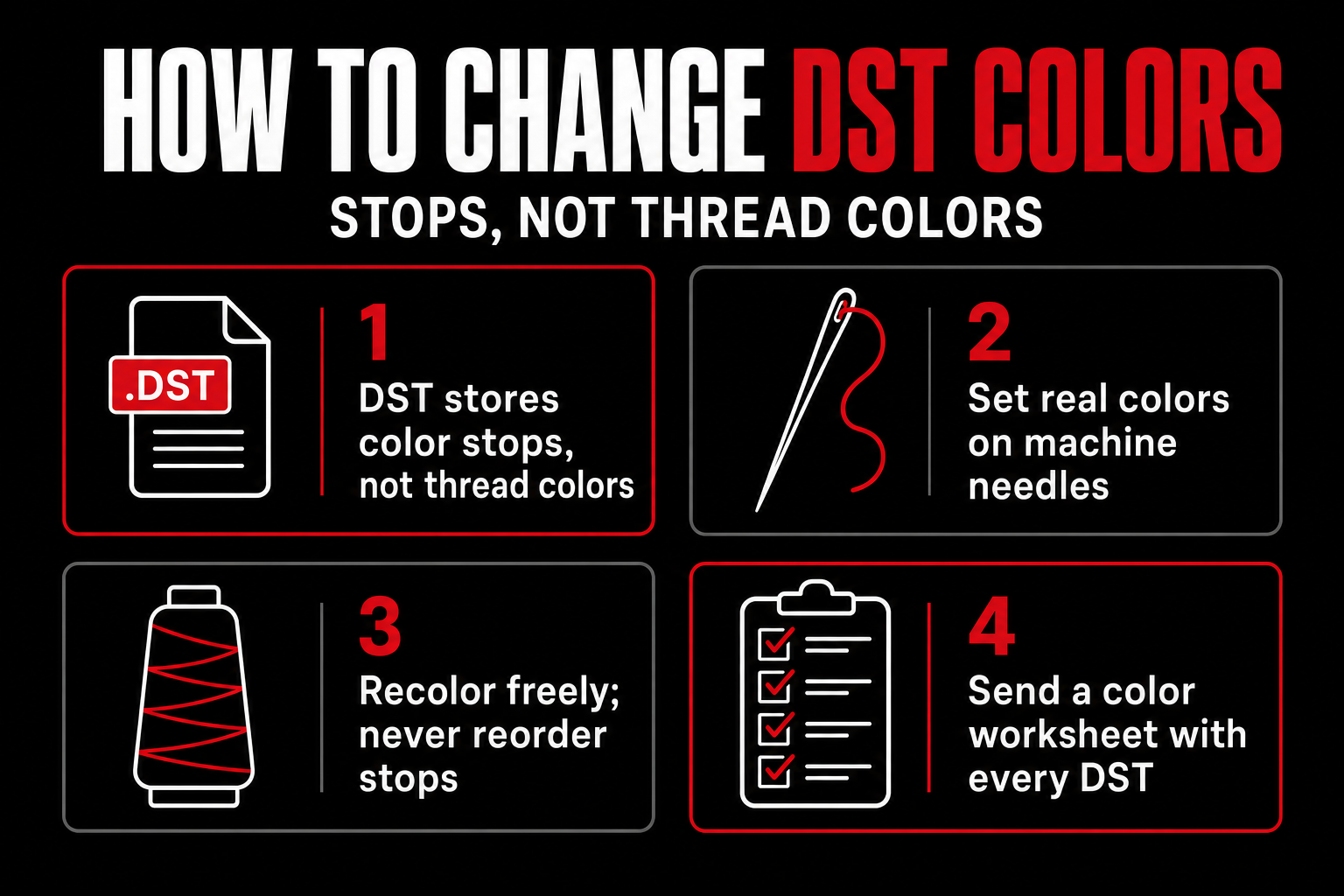
A DST file stores stitches and color-change stops, not thread colors, so every viewer shows guessed colors. Here is how to set real colors on the machine, recolor the preview in common software, and send a color worksheet that removes the guesswork.
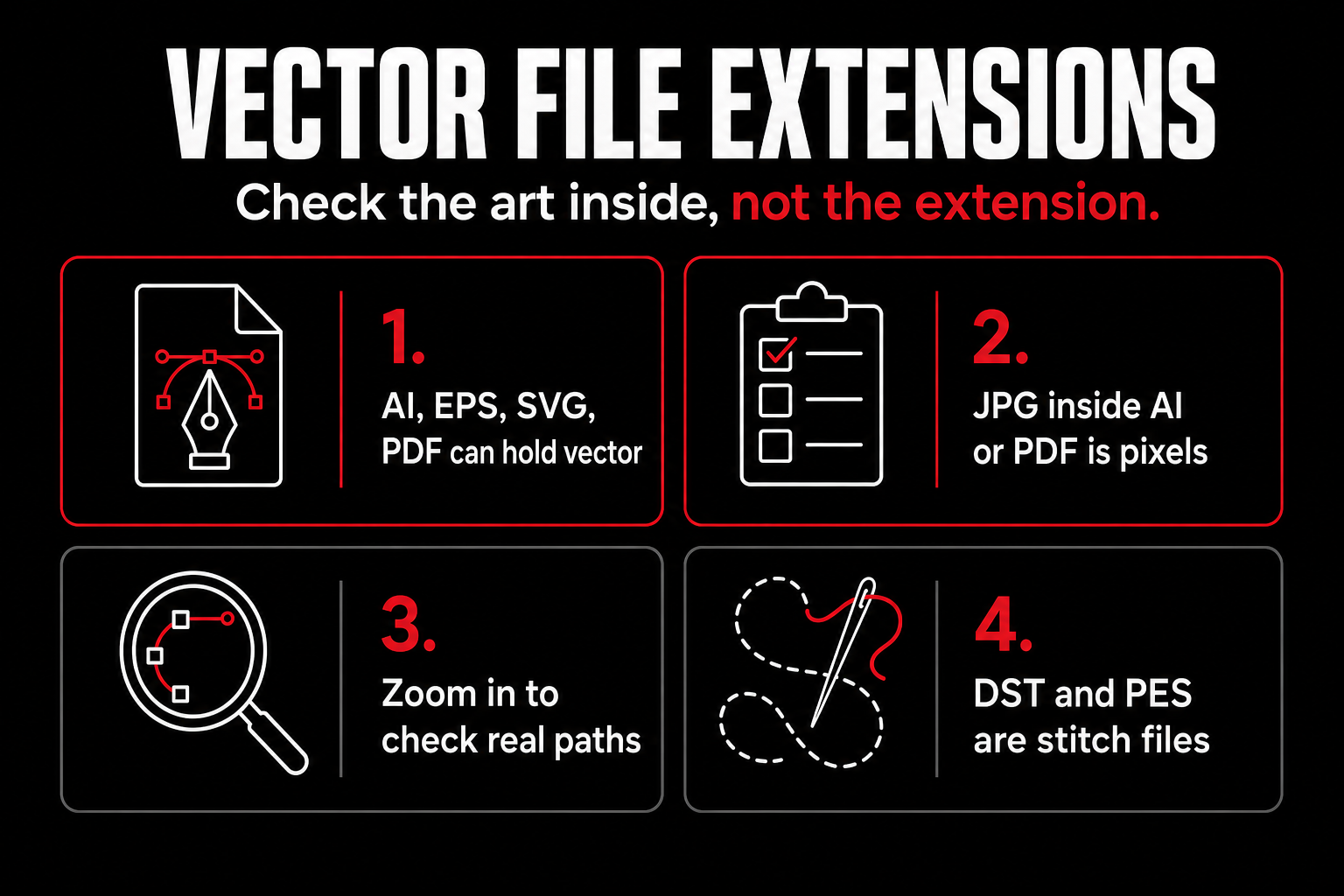
Which file extensions are vector (AI, EPS, SVG, PDF, CDR, DXF and more), why a vector extension does not prove the artwork inside is vector, how to check a file in a minute, and which one to send for embroidery digitizing, screen print, vinyl, DTF and laser.
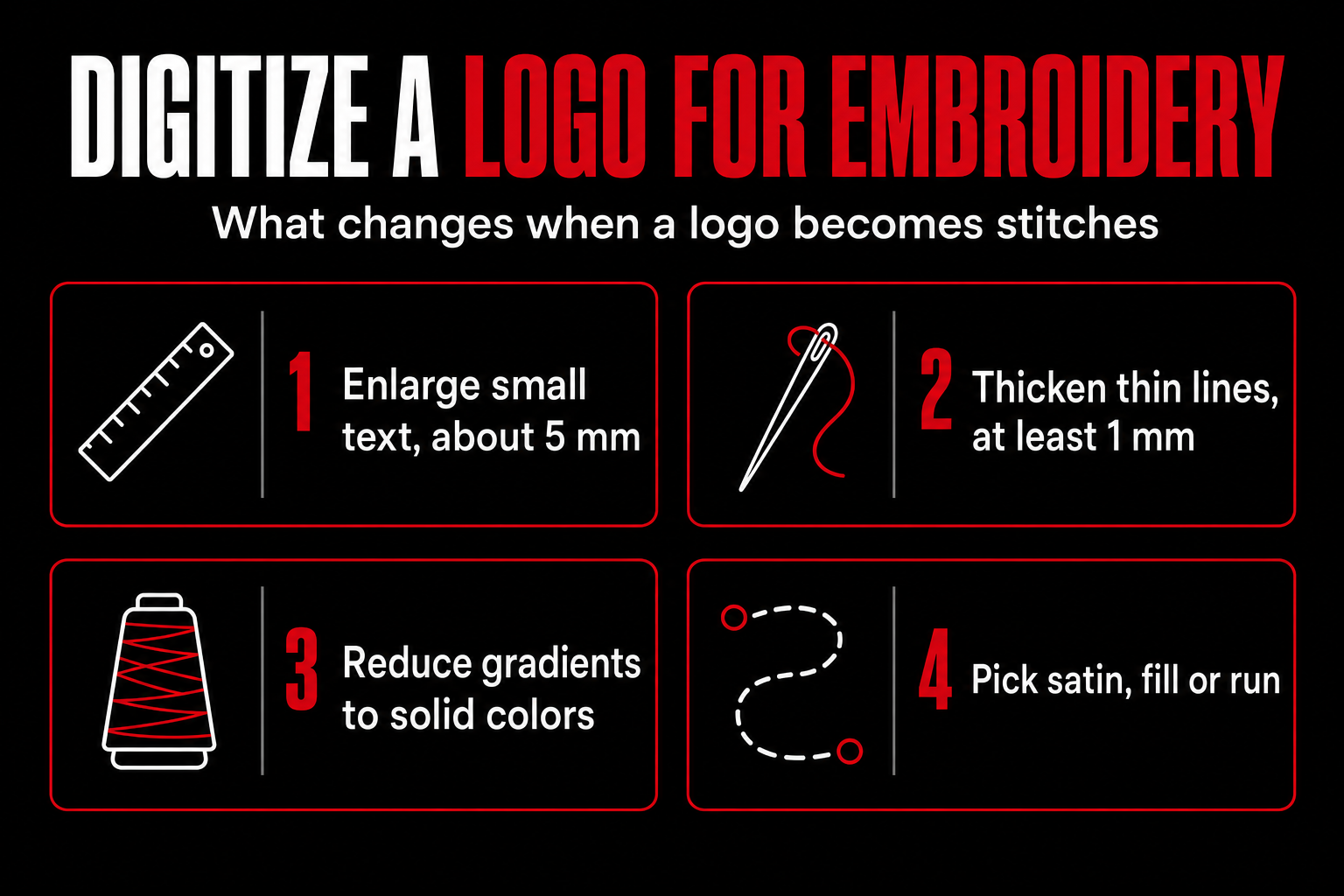
What a digitizer changes when a brand logo becomes stitches, from small text and thin lines to gradients, and how the same logo shifts between a polo, a cap and a jacket back.
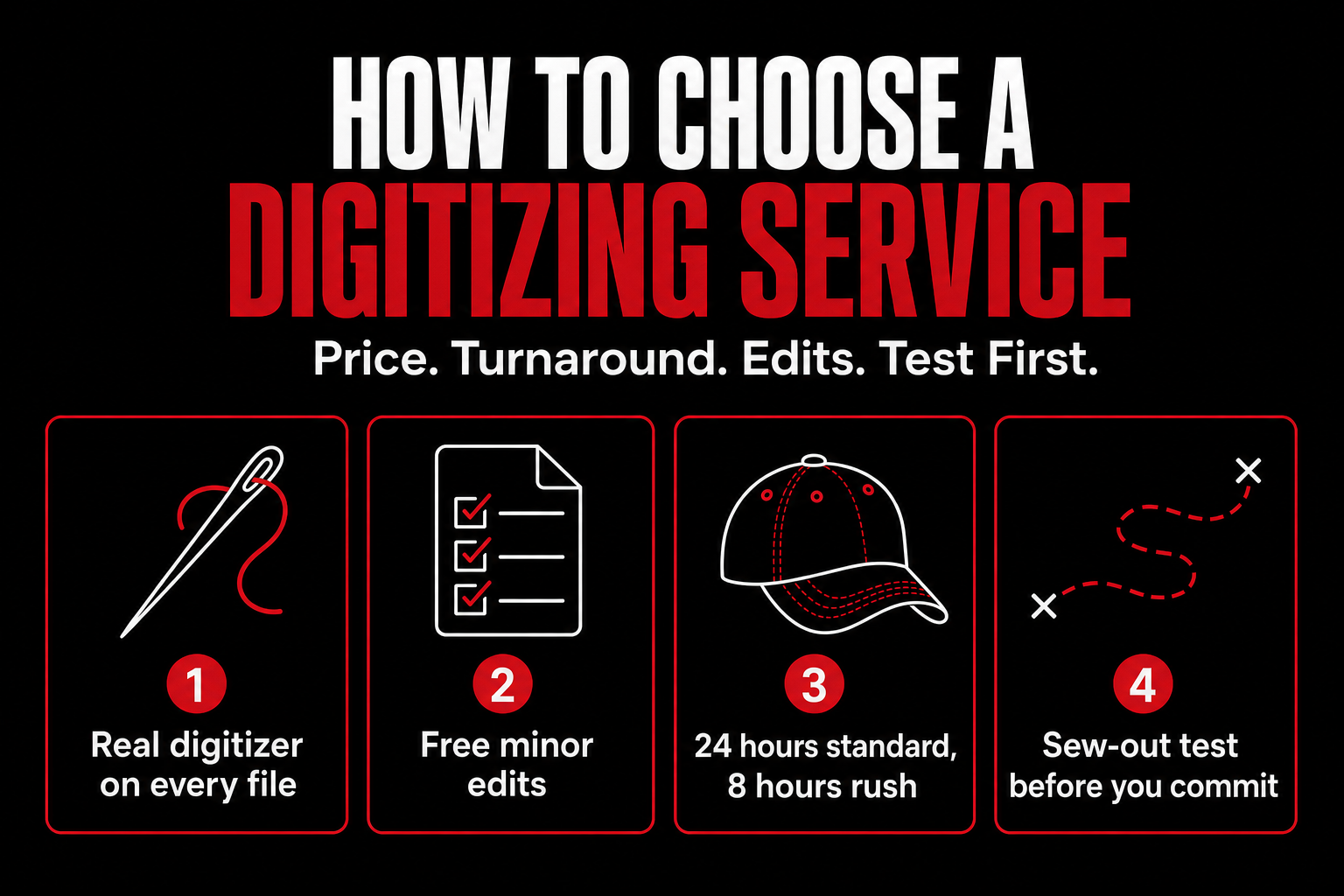
A buyer checklist for embroidery shops comparing digitizing services. How pricing is quoted, what to ask about revisions, formats and file ownership, and how to test a new digitizer before you trust them with real orders.
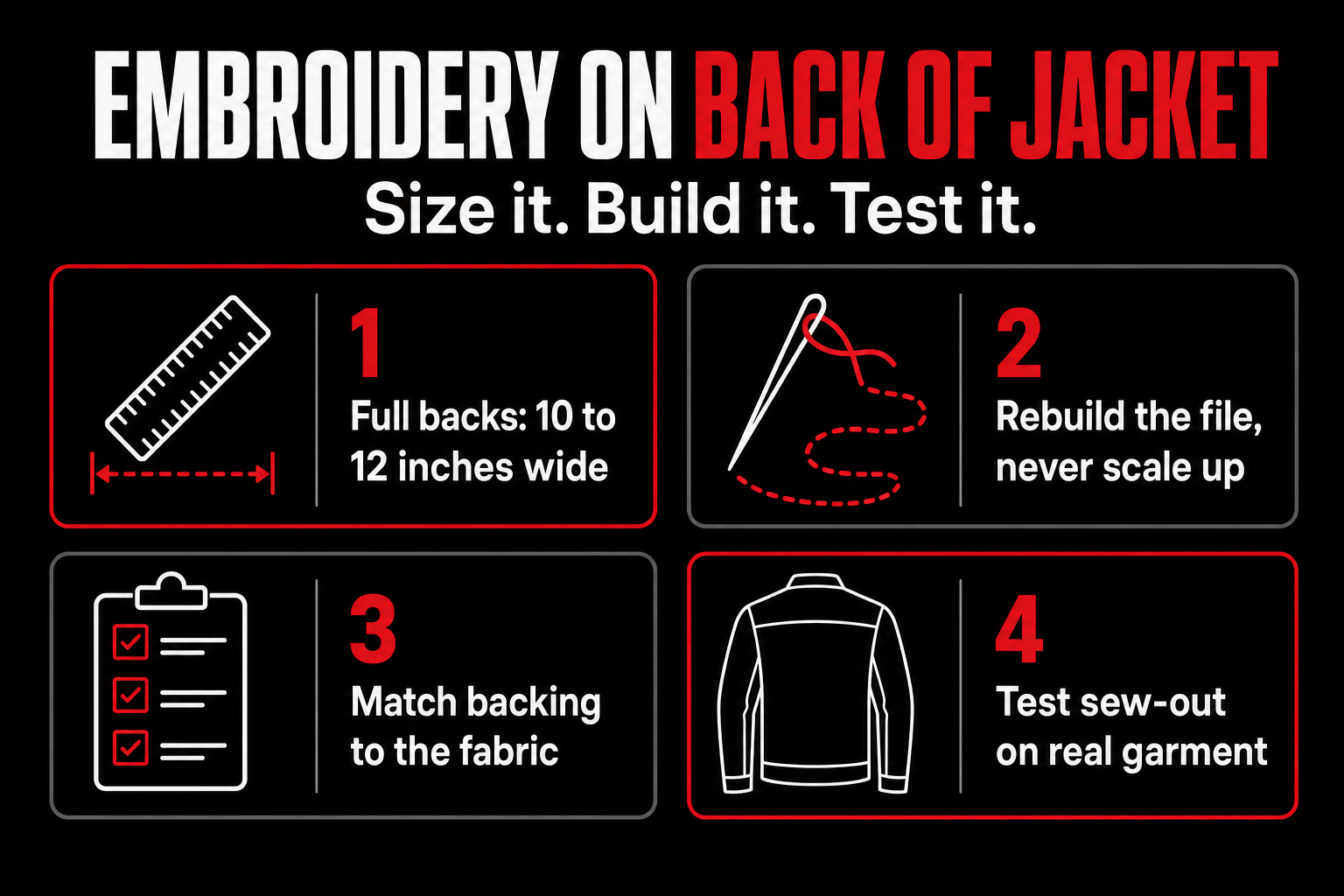
A full back is the biggest job most shops sew. Here are the sizes by garment, how stitch count turns into run time, how to control push and pull, and how to hoop, back and split large designs on jackets, hoodies and work shirts.
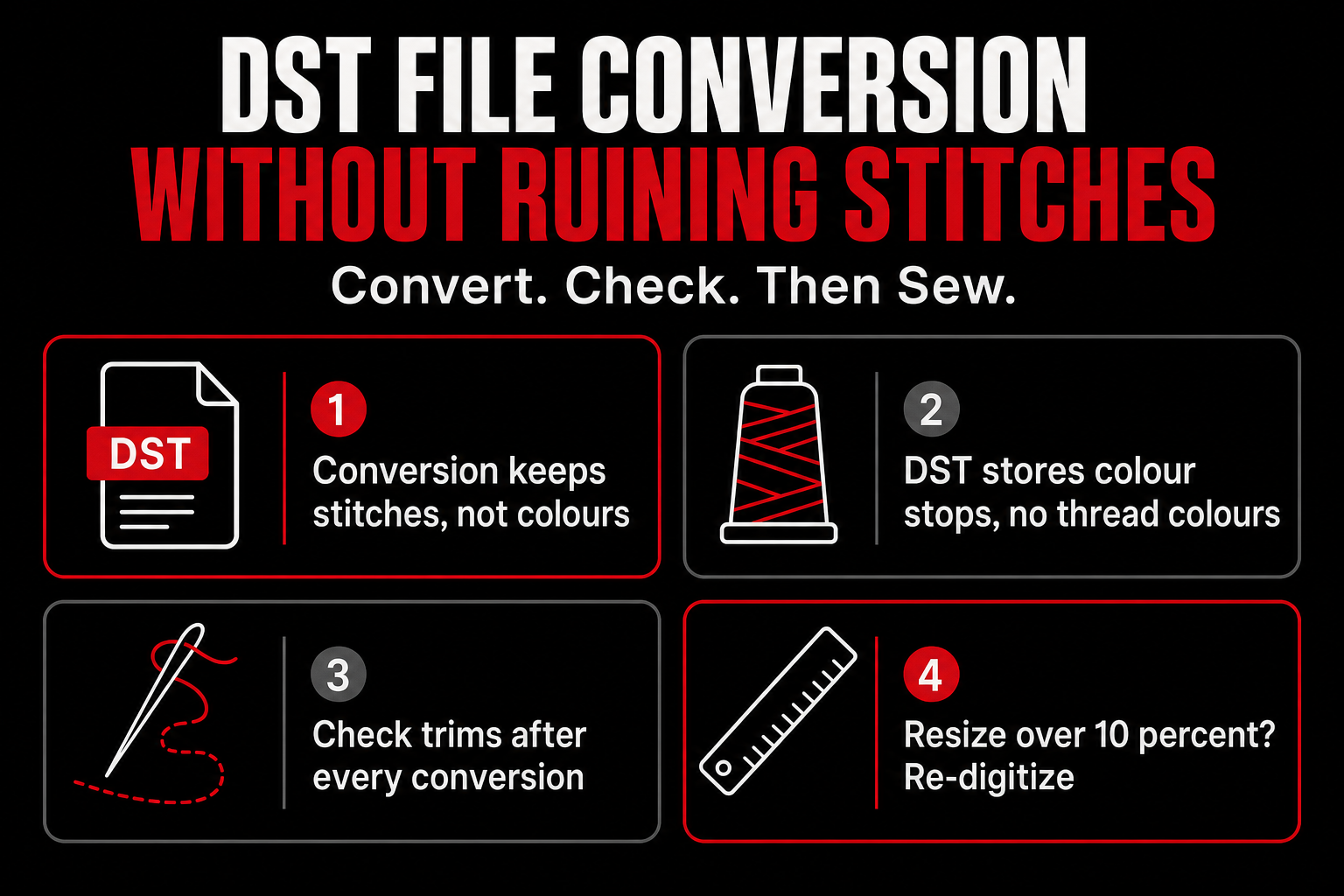
Converting DST, PES, EXP, JEF and VP3 files is easy. Converting them safely is not. Here is what a conversion keeps, what it drops, why resizing a stitch file is risky, and when to re-digitize instead.
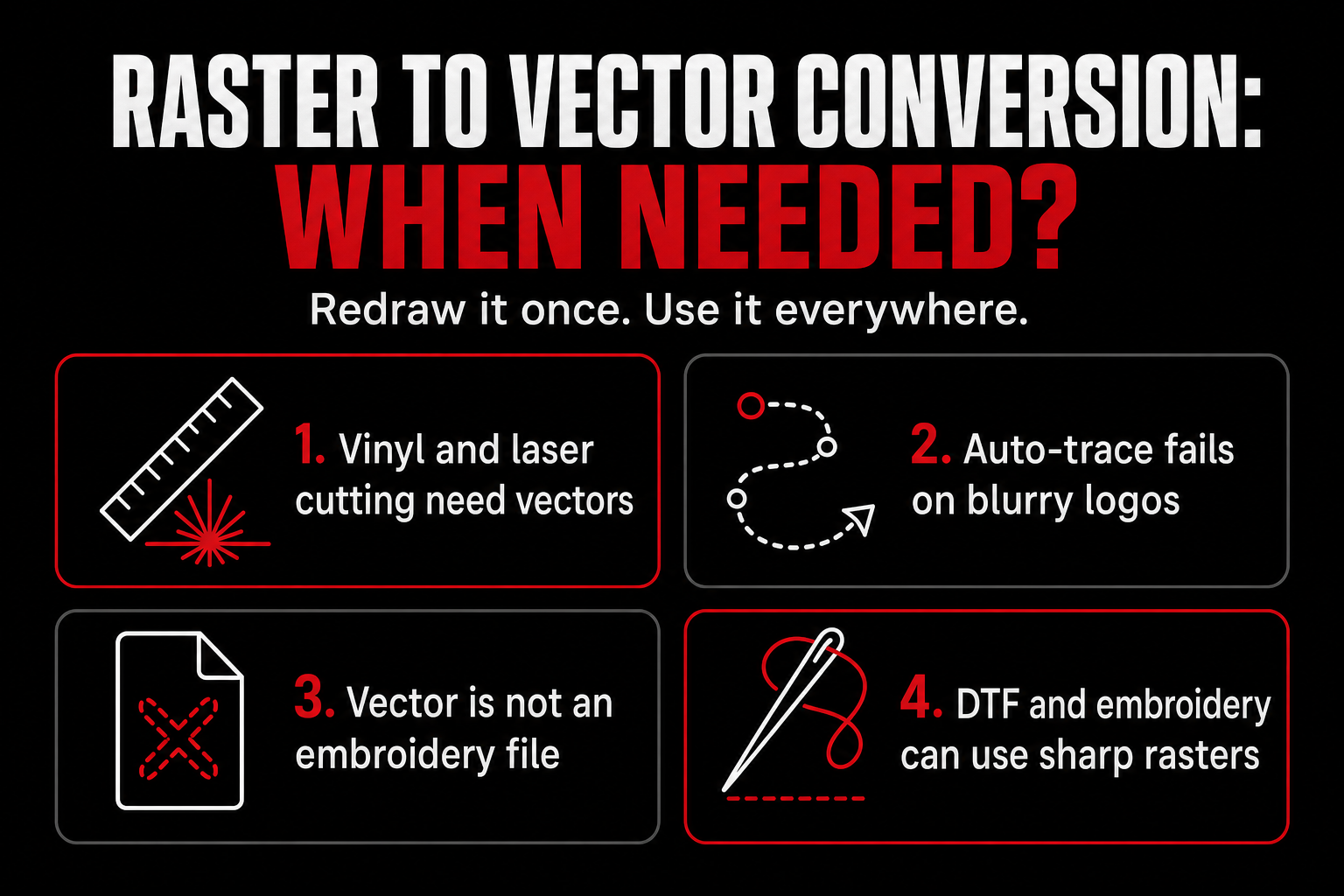
Raster to vector conversion rebuilds a pixel image as clean paths. Here is which decoration methods truly need a vector, which only need a sharp high-resolution file, why auto-trace often fails, and how vector art fits with embroidery digitizing.
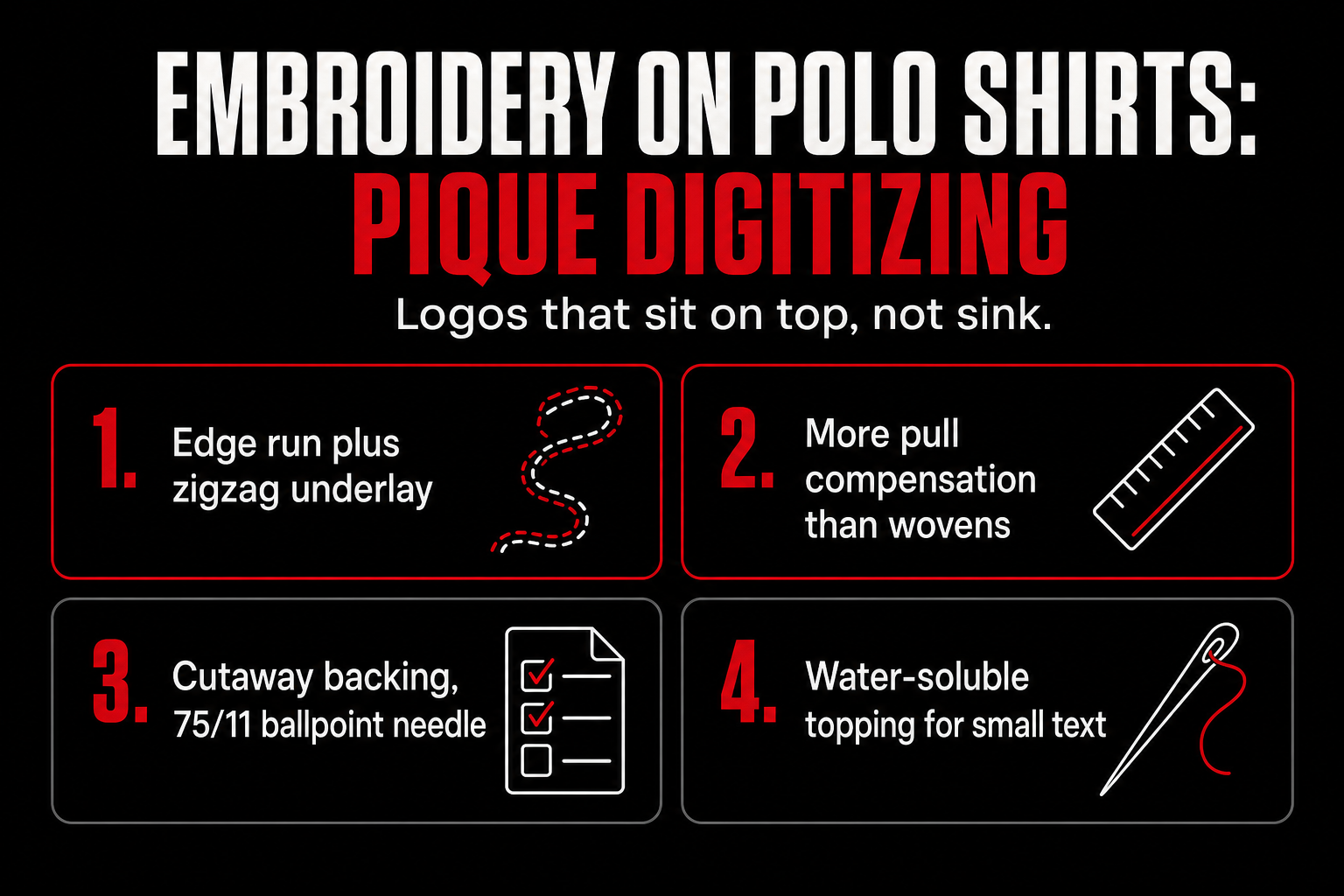
Pique polos have a waffle texture and a knit that stretches, so a logo can sink, pucker or lose its edges. Here is how the file, backing, needle and hooping should be set up so it sews clean.
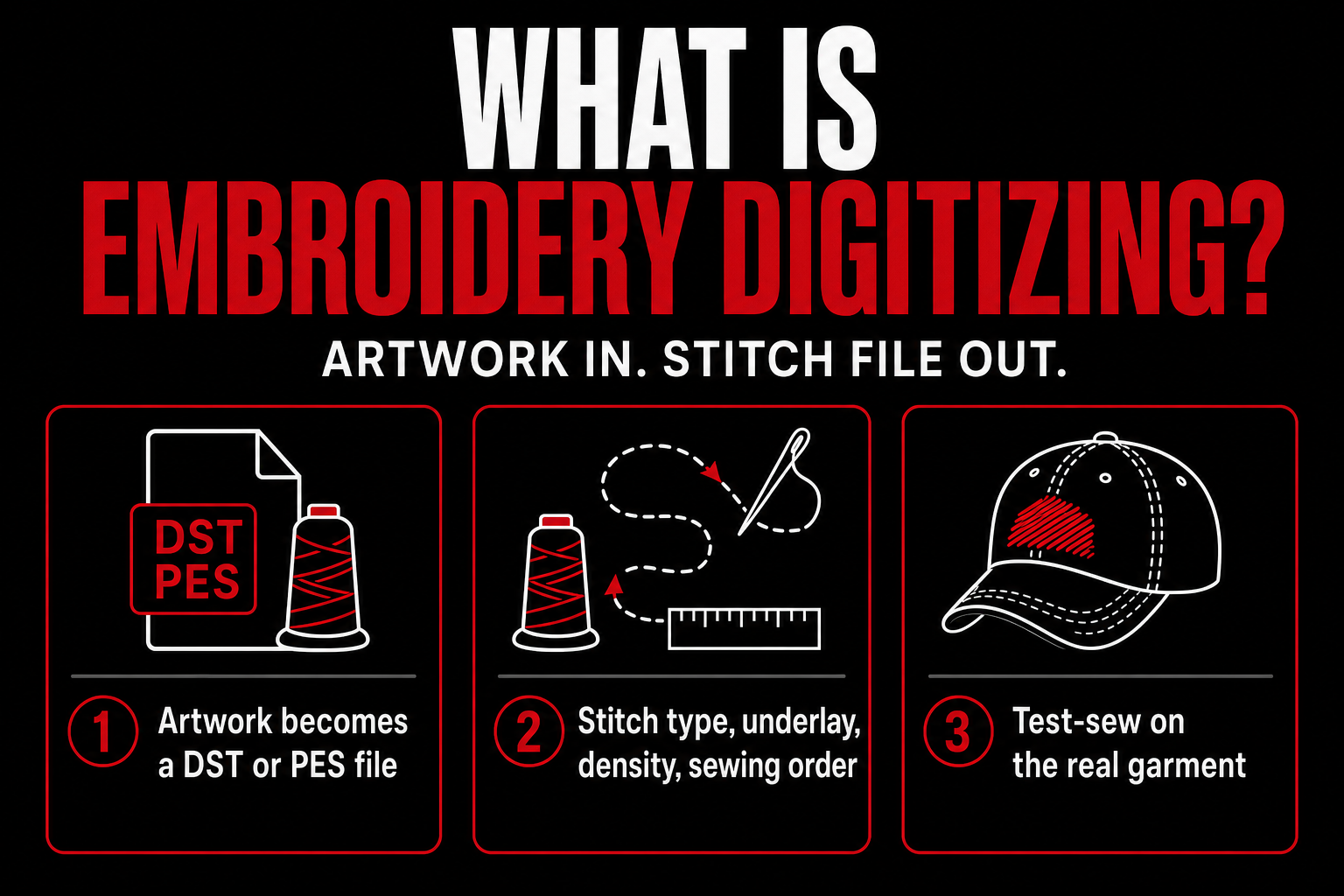
Embroidery digitizing turns a logo into stitch-by-stitch instructions your machine can sew. Here is what a digitizer actually decides, why a JPG or PDF cannot go straight to the machine, and what to check before you run a new file.
Send your artwork. Get a clean cap file.
Quoted before we start. Free edits until it runs right.