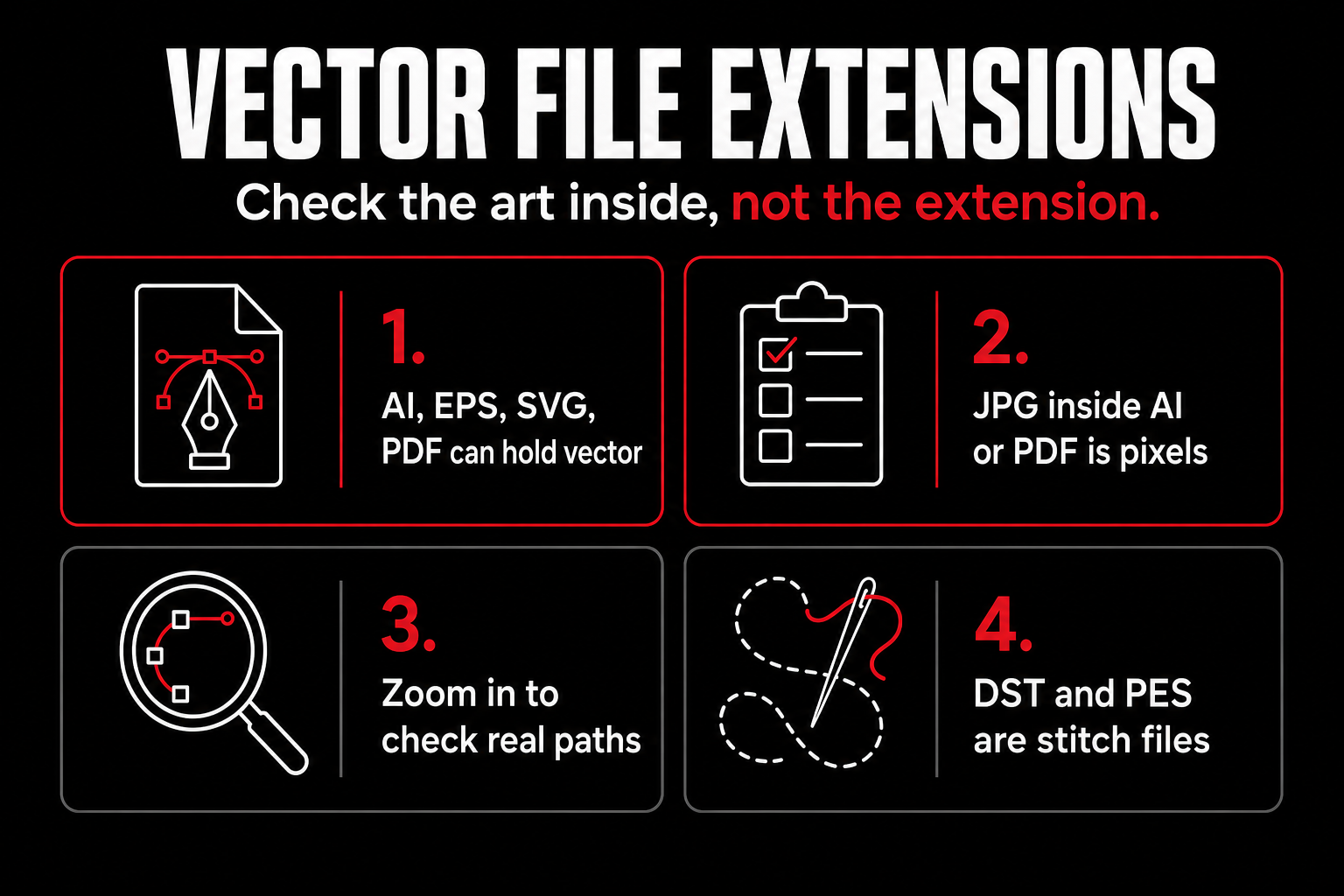
Which file extensions are vector (AI, EPS, SVG, PDF, CDR, DXF and more), why a vector extension does not prove the artwork inside is vector, how to check a file in a minute, and which one to send for embroidery digitizing, screen print, vinyl, DTF and laser.
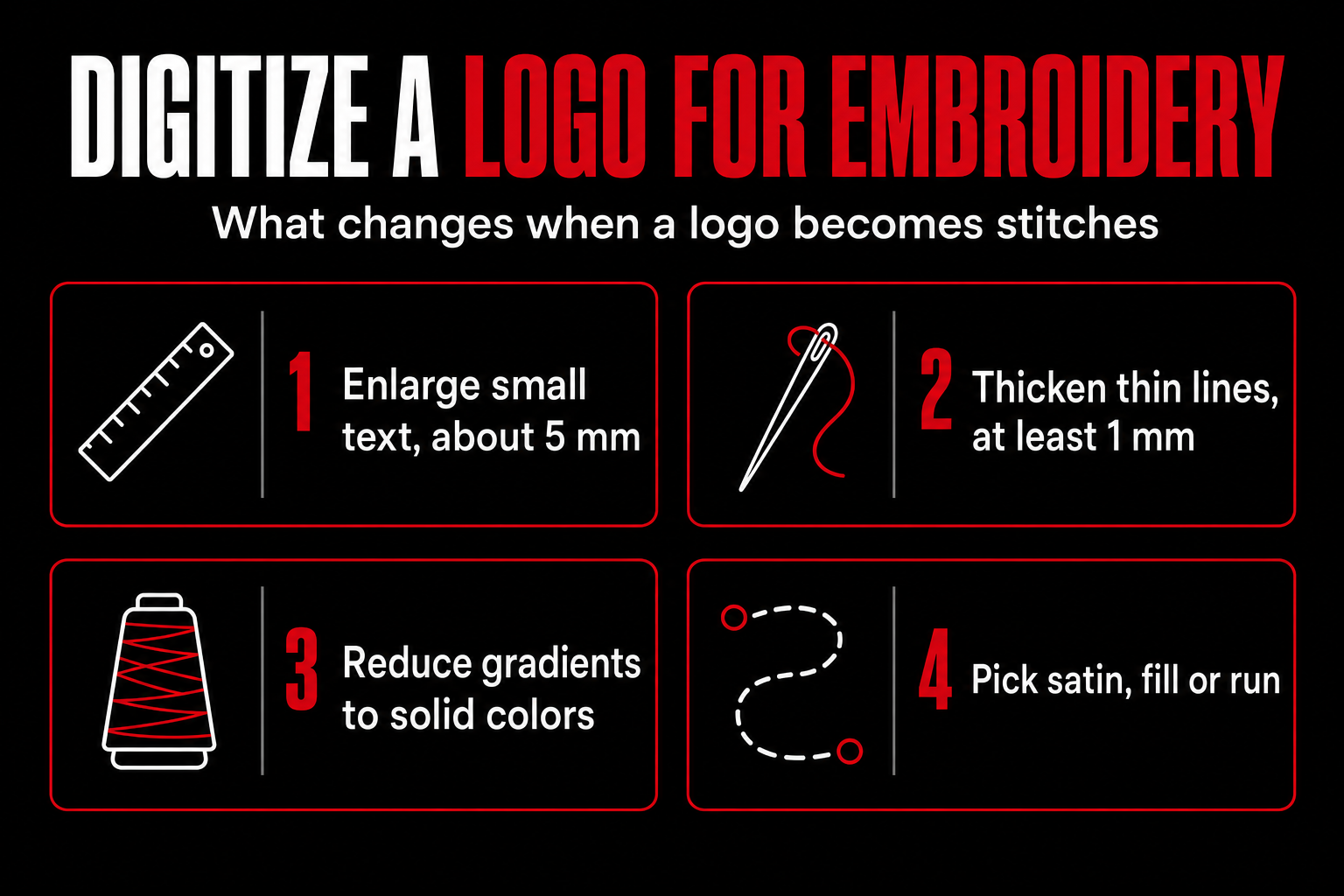
What a digitizer changes when a brand logo becomes stitches, from small text and thin lines to gradients, and how the same logo shifts between a polo, a cap and a jacket back.
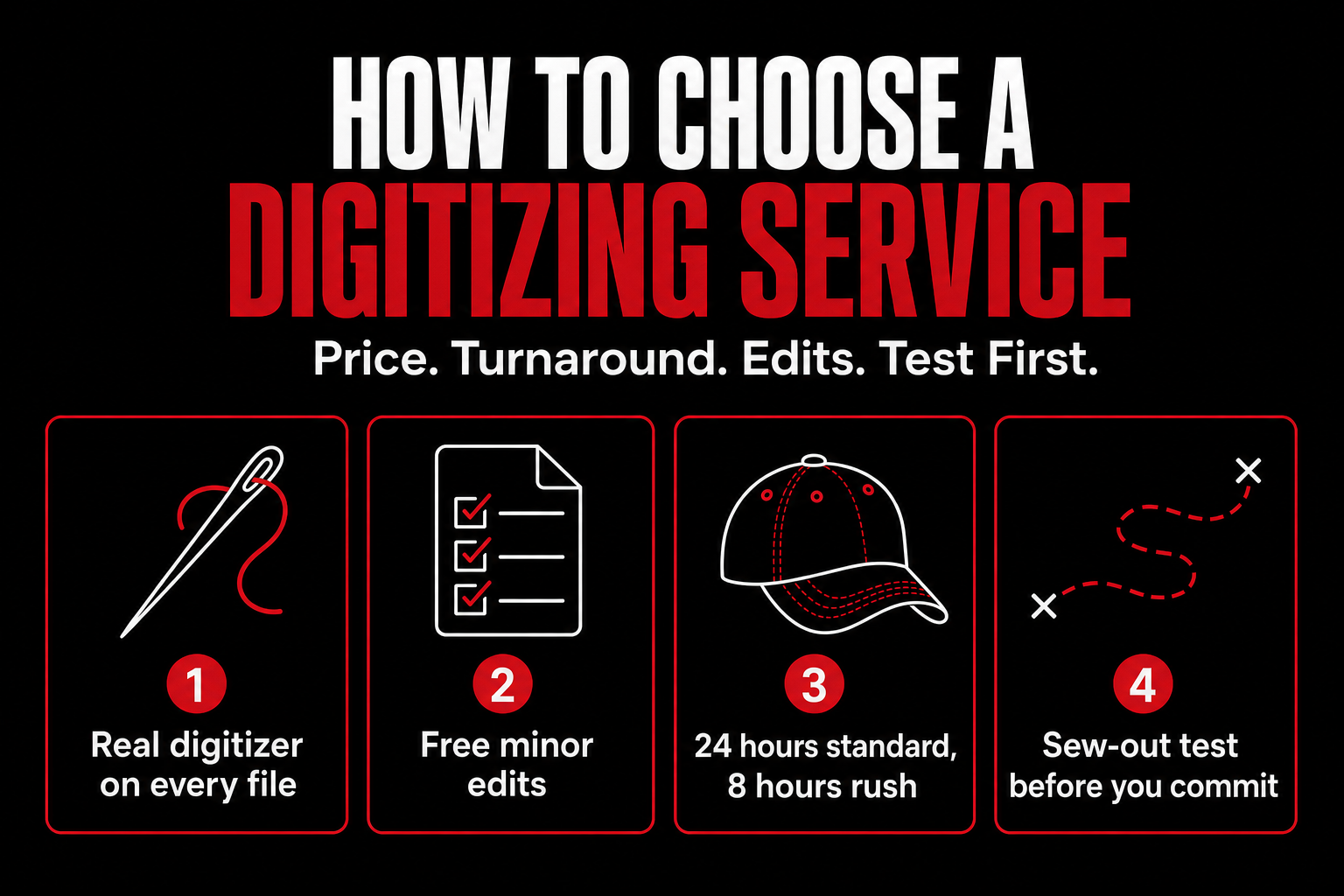
A buyer checklist for embroidery shops comparing digitizing services. How pricing is quoted, what to ask about revisions, formats and file ownership, and how to test a new digitizer before you trust them with real orders.
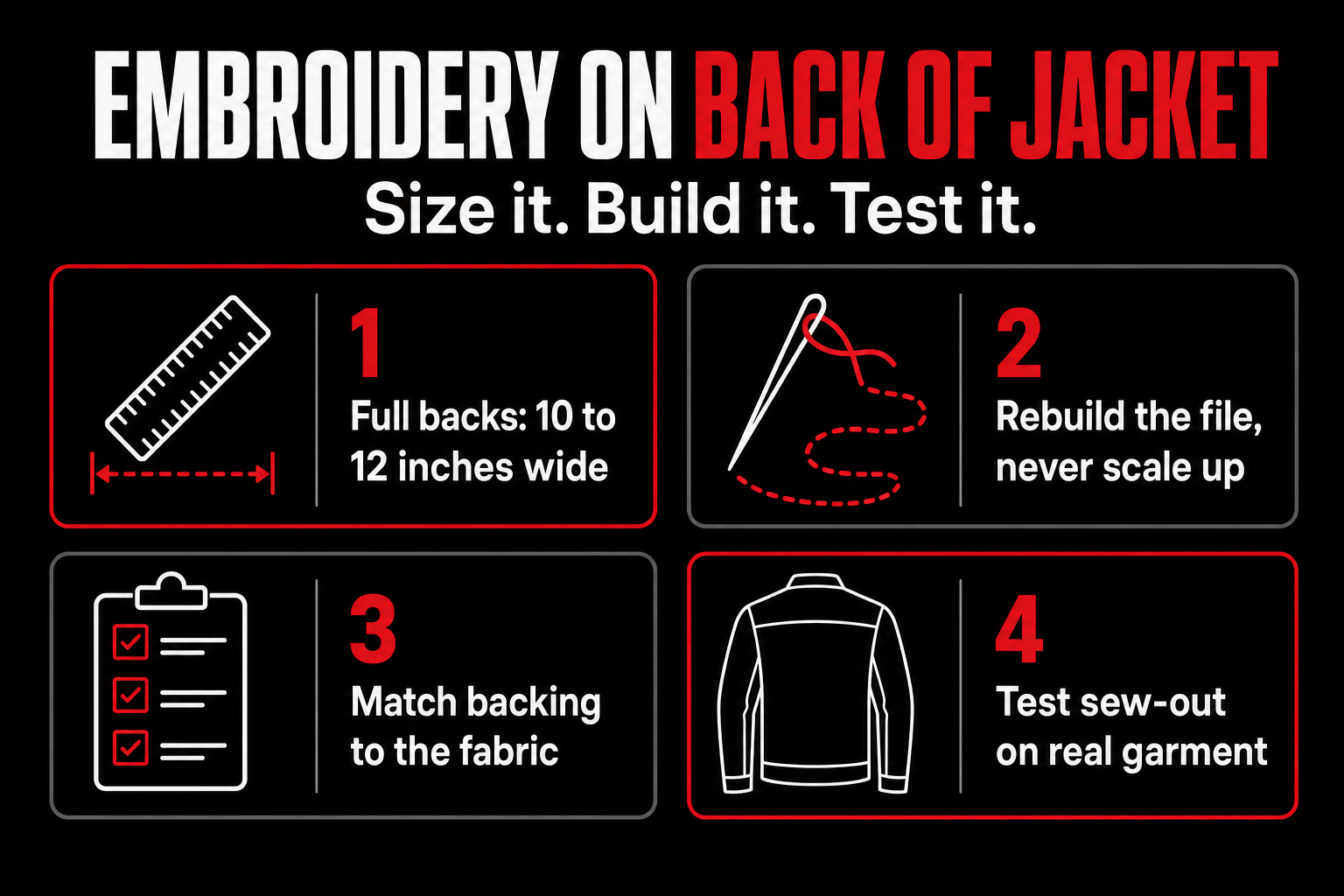
A full back is the biggest job most shops sew. Here are the sizes by garment, how stitch count turns into run time, how to control push and pull, and how to hoop, back and split large designs on jackets, hoodies and work shirts.
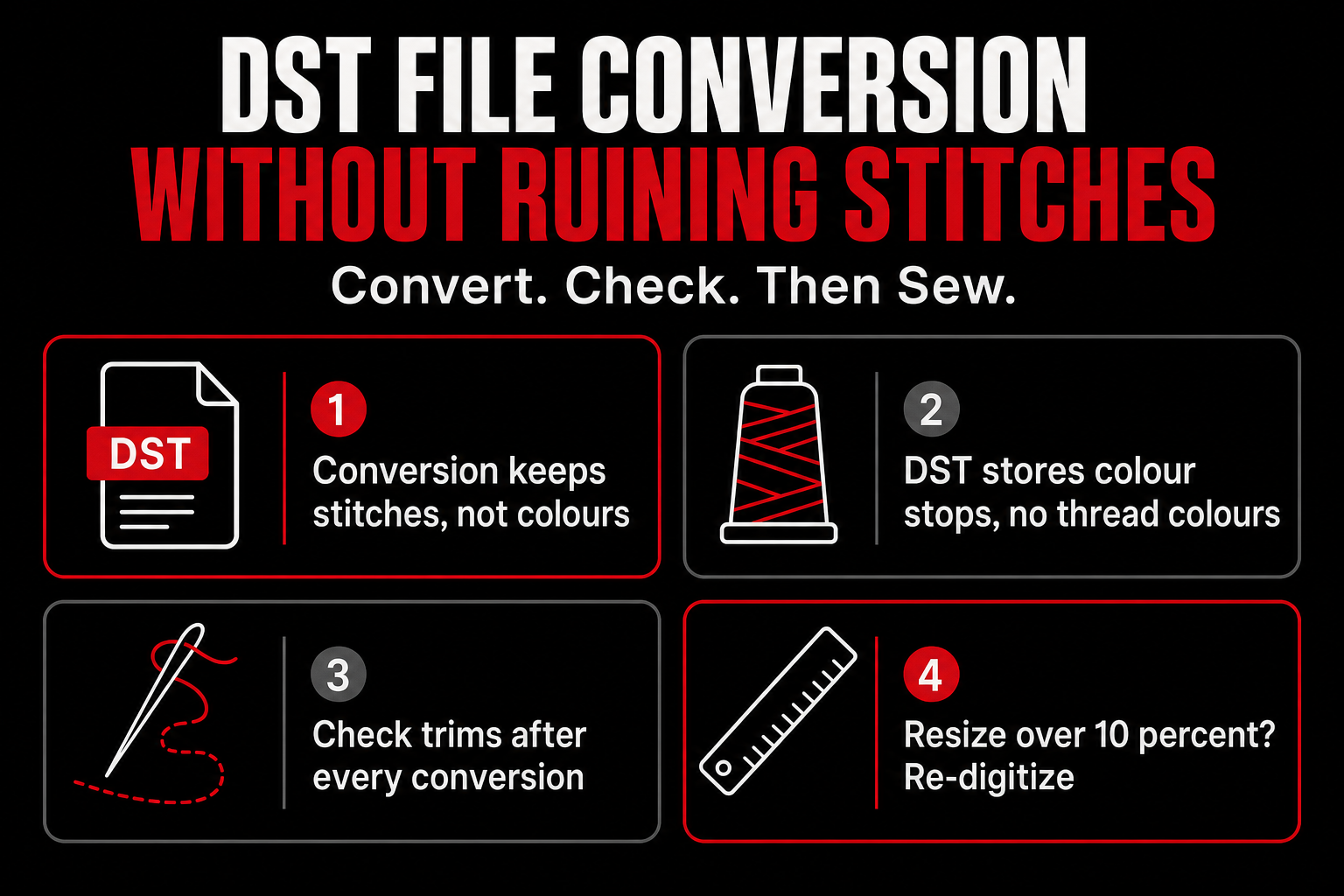
Converting DST, PES, EXP, JEF and VP3 files is easy. Converting them safely is not. Here is what a conversion keeps, what it drops, why resizing a stitch file is risky, and when to re-digitize instead.
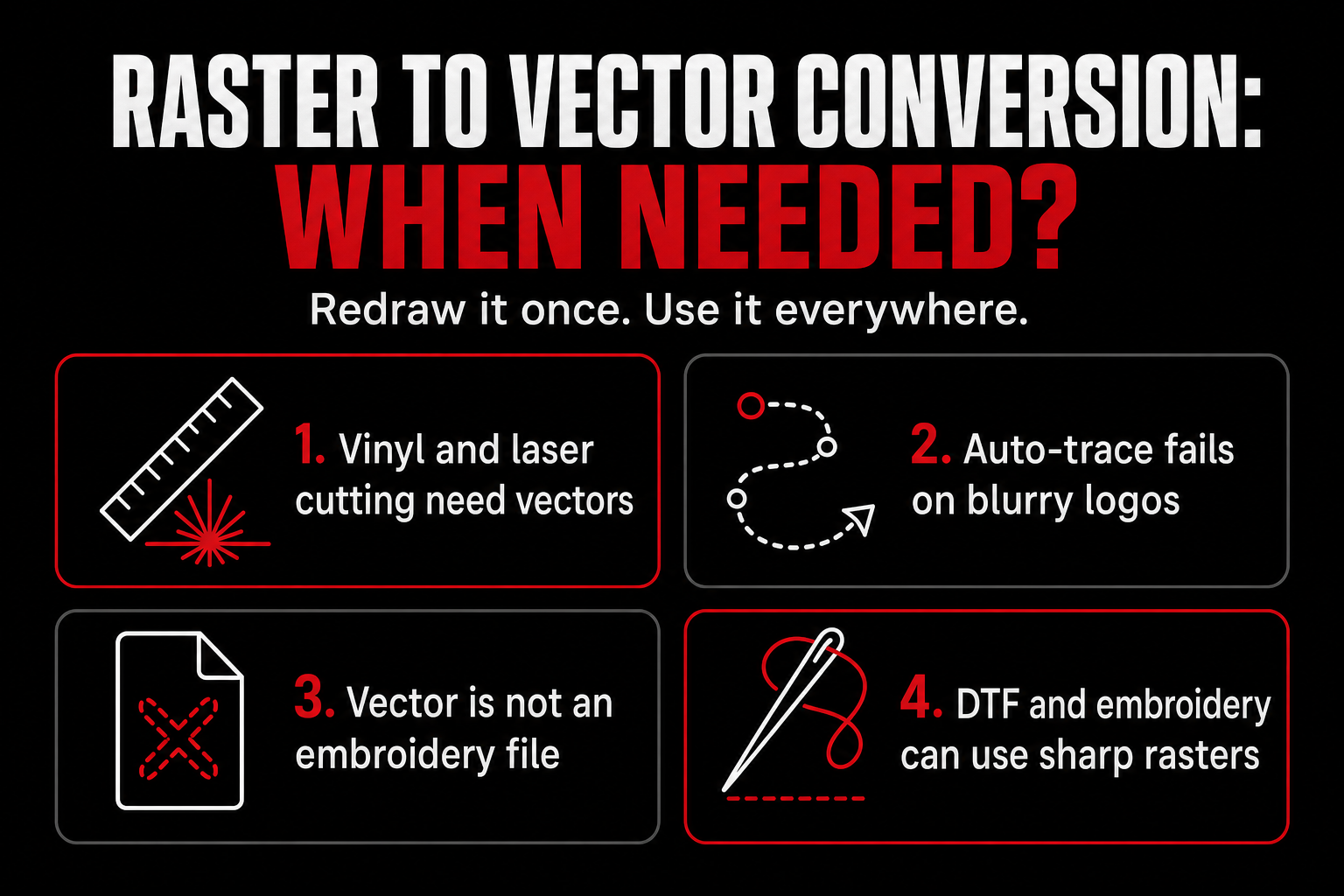
Raster to vector conversion rebuilds a pixel image as clean paths. Here is which decoration methods truly need a vector, which only need a sharp high-resolution file, why auto-trace often fails, and how vector art fits with embroidery digitizing.
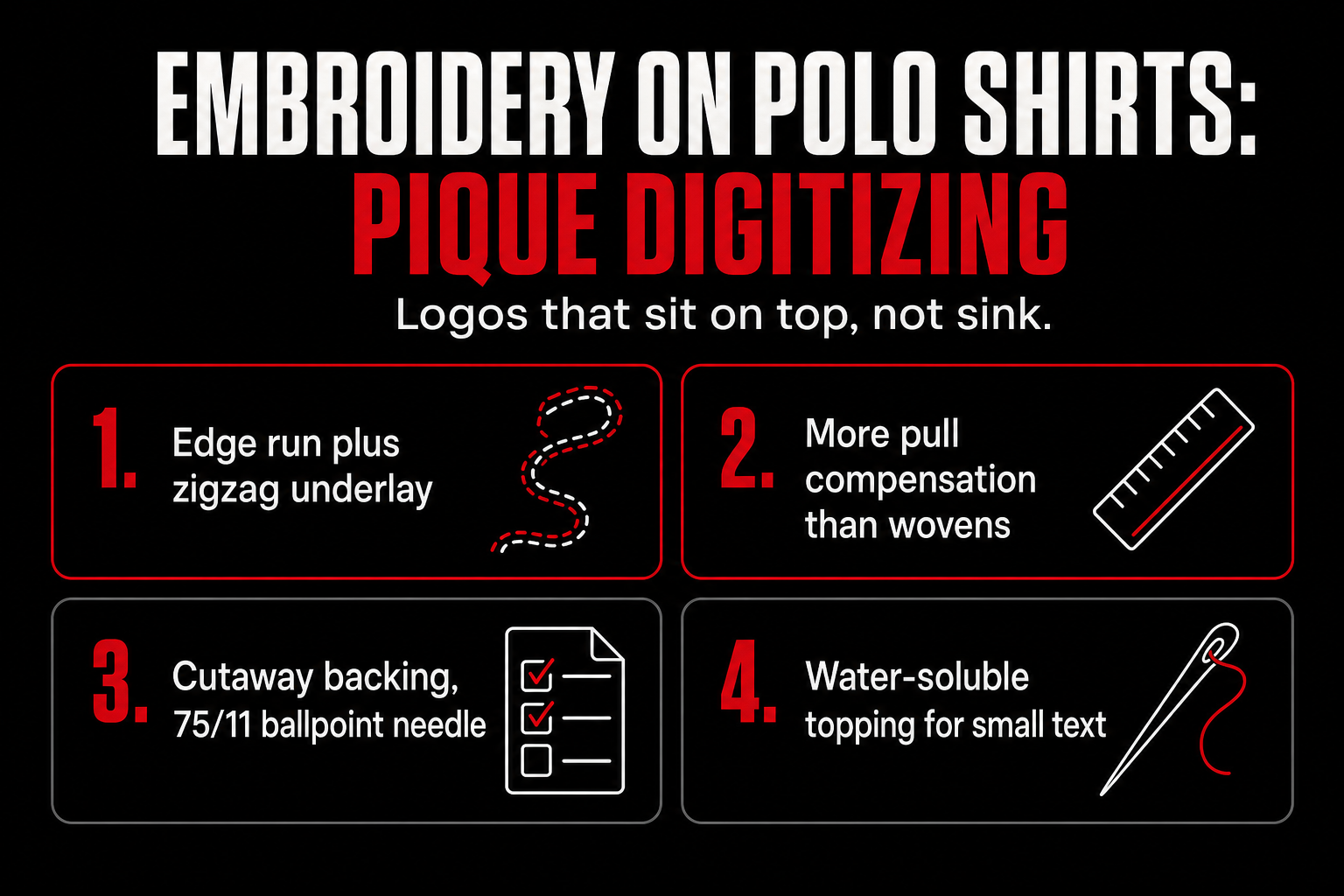
Pique polos have a waffle texture and a knit that stretches, so a logo can sink, pucker or lose its edges. Here is how the file, backing, needle and hooping should be set up so it sews clean.
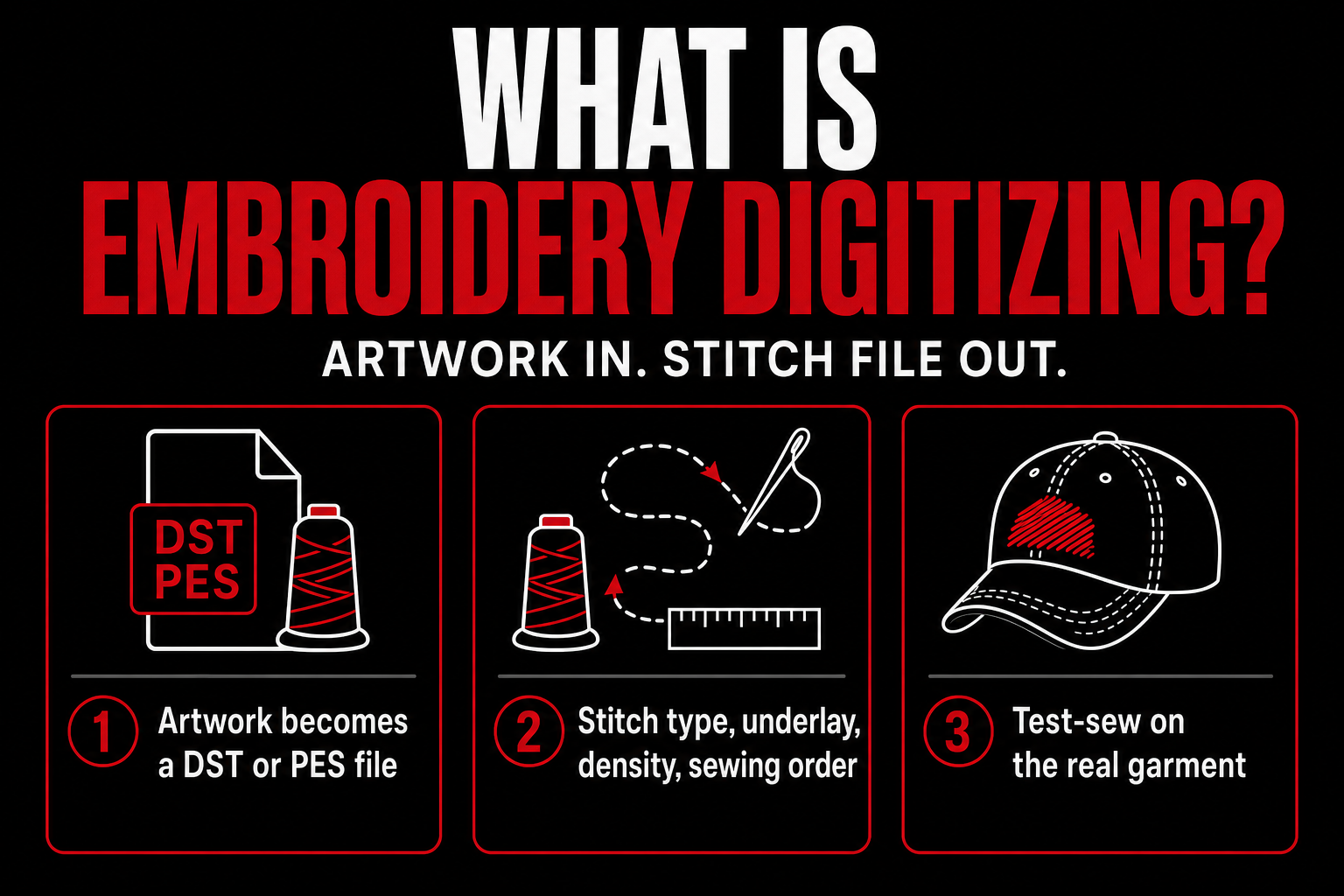
Embroidery digitizing turns a logo into stitch-by-stitch instructions your machine can sew. Here is what a digitizer actually decides, why a JPG or PDF cannot go straight to the machine, and what to check before you run a new file.
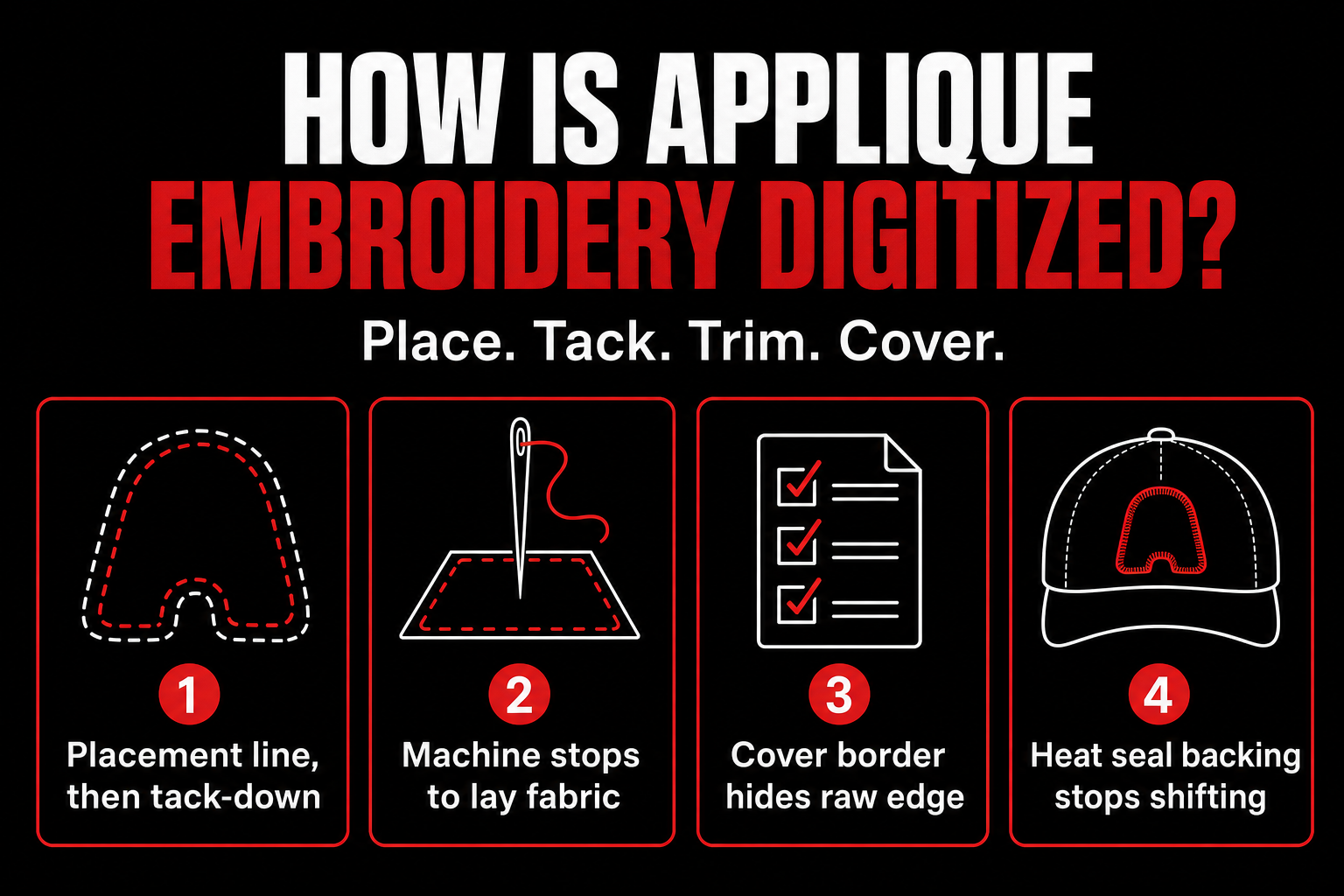
Appliqué swaps a big stitched fill for a piece of fabric. Here is how a production appliqué file is built, from placement line to tack-down to cover stitch, and how to set it up on jackets, bags and tees.
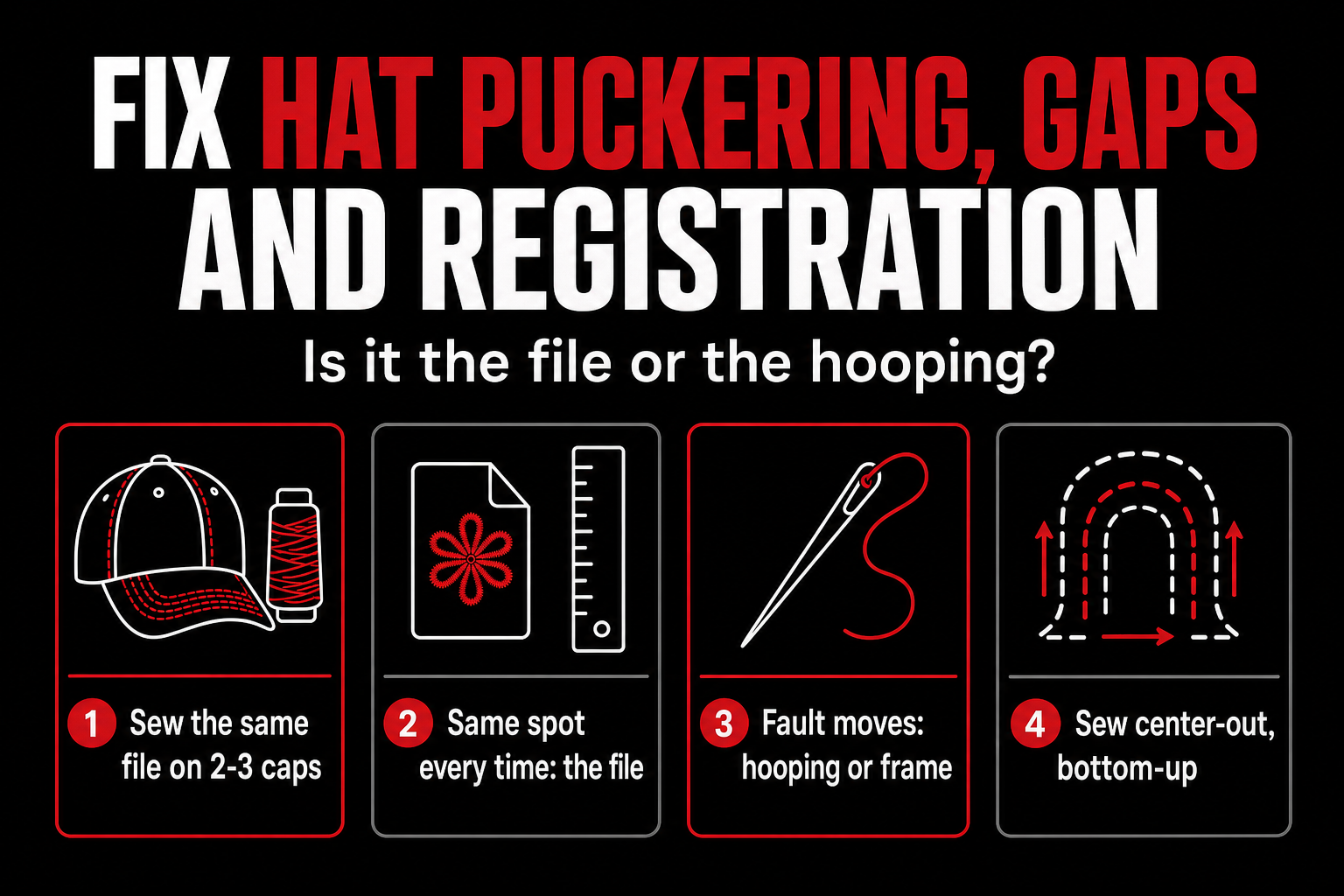
Is it the file or the hooping? A simple test, a symptom table and the fixes for puckering, gaps between outlines and fills, flagging and thread breaks on caps.
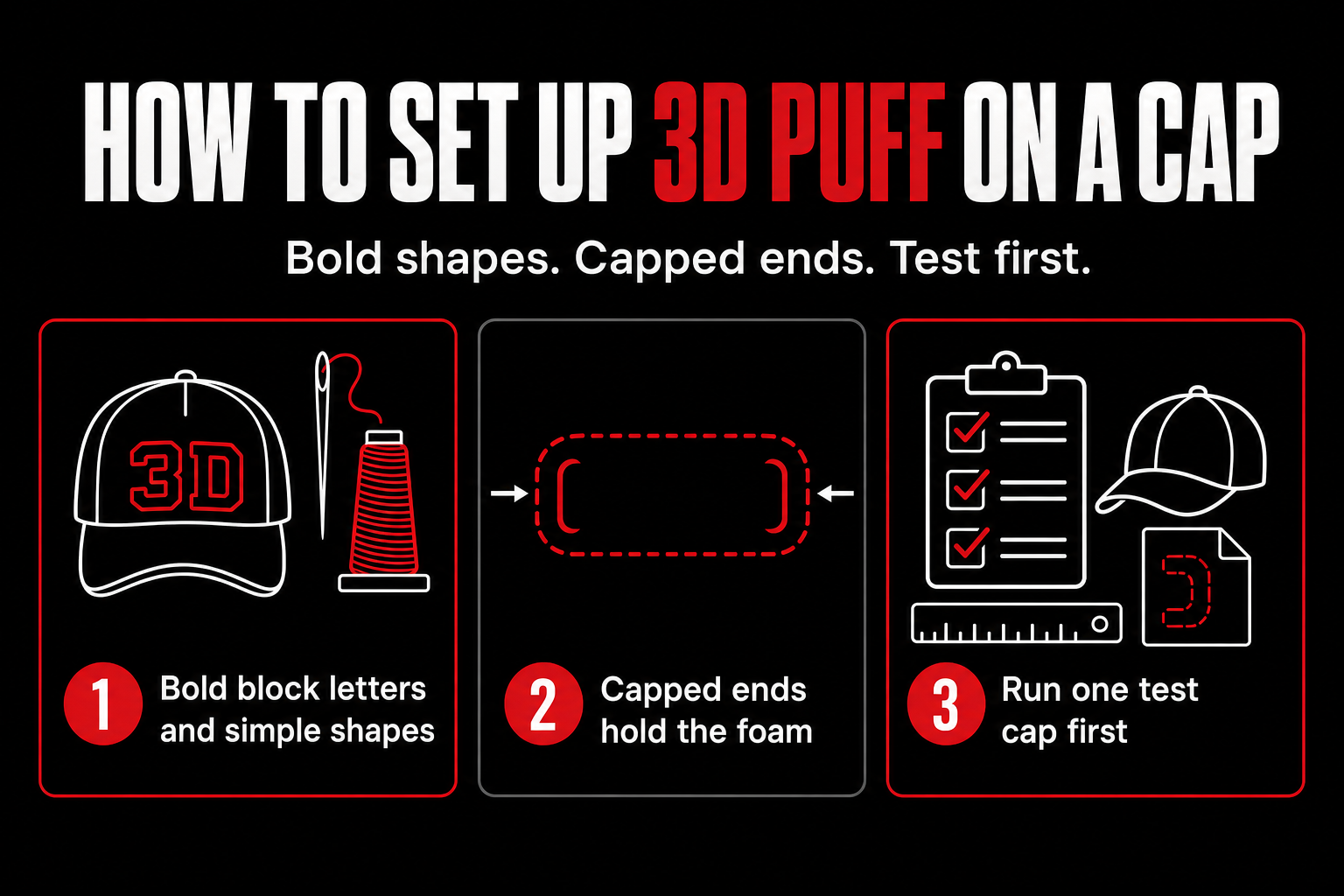
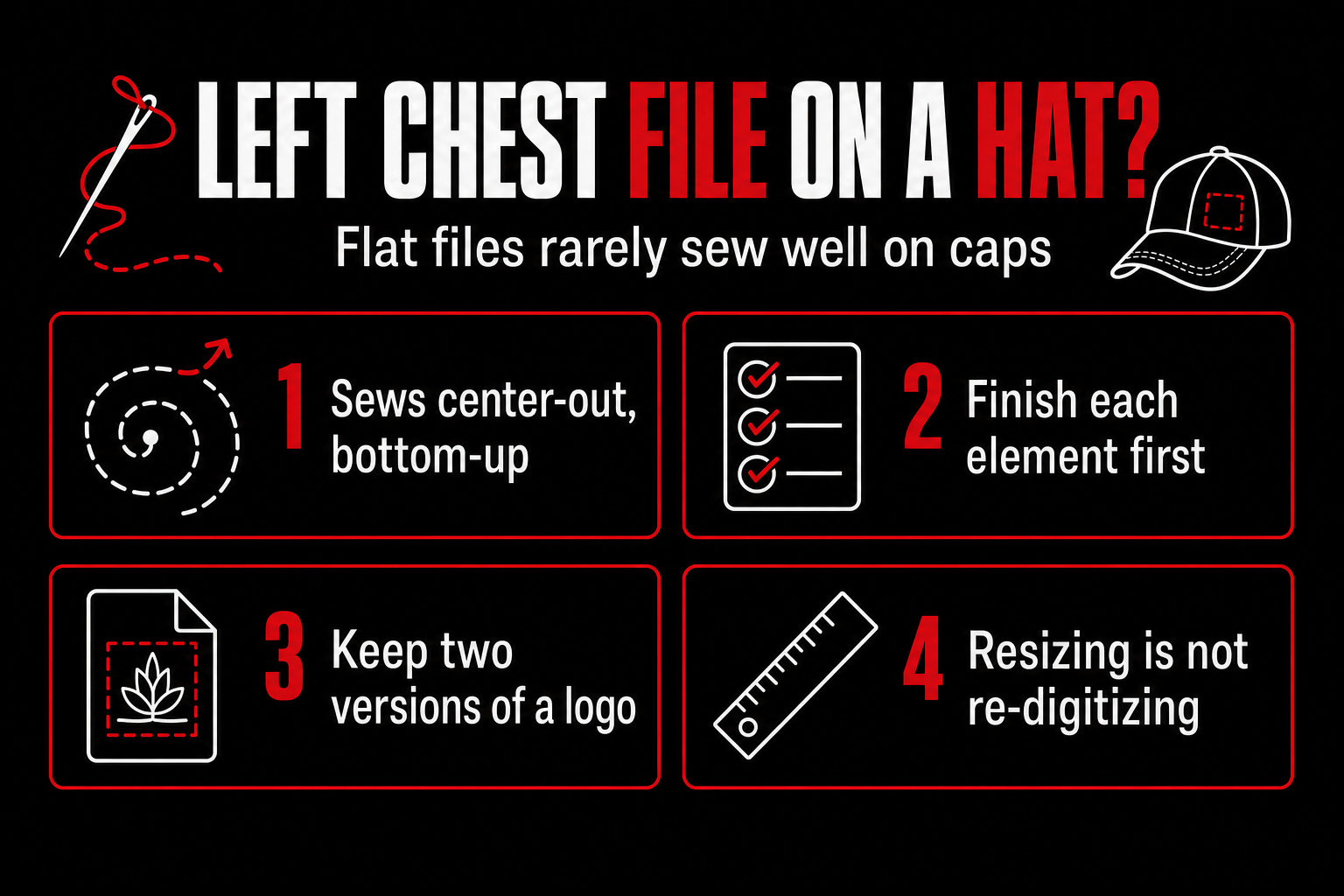
A left chest file will usually sew on a cap, but rarely sews well. Here is what a cap file does differently and when it is worth getting a second version.
Send your artwork. Get a clean cap file.
Quoted before we start. Free edits until it runs right.